RAD-140 (Testolone) Guide: Results, Dosage, Side Effects and the Human Evidence
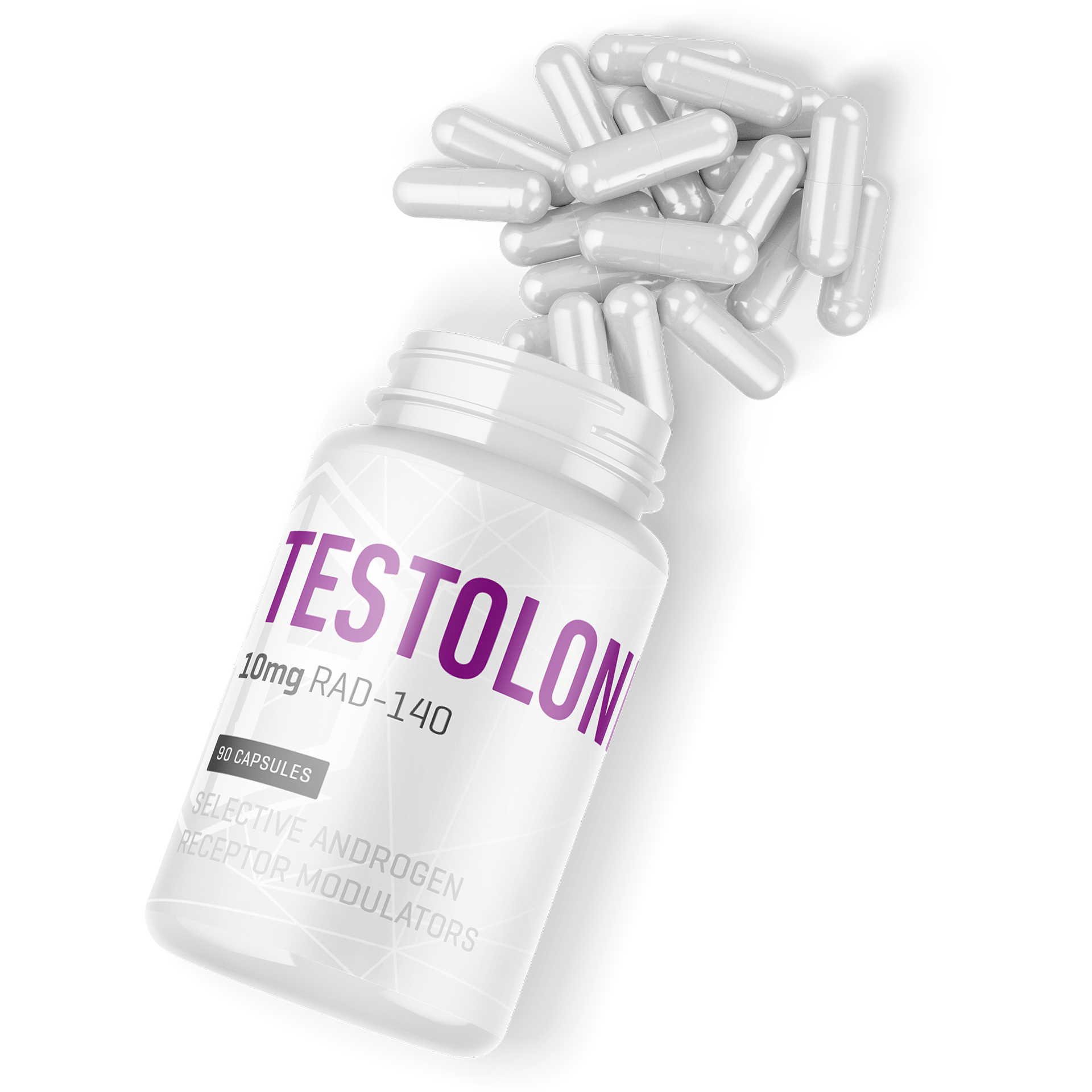
RAD-140 is probably the most hyped SARM on the market, and the compound with the widest gap between what forums claim and what the research shows. There is exactly one published human trial. It was run in cancer patients, at doses far above anything the gray market discusses, and its most common side effect was elevated liver enzymes.
That does not make RAD-140 uninteresting. The preclinical data is some of the strongest in the SARM class, and there are real reasons researchers keep working on it. But if you are going to research this compound, you should know what the evidence actually says. Every claim below links to the study behind it.
What Is RAD-140 (Testolone)?
RAD-140, also called Testolone, is a nonsteroidal selective androgen receptor modulator developed by Radius Health as a potential treatment for muscle wasting and, later, for certain breast cancers. Like other SARMs, it binds the androgen receptor selectively: strong anabolic signalling in muscle and bone, much weaker activity in tissues like the prostate.
Despite the nickname, Testolone is not testosterone and does not convert to it. It is a different molecule that pulls on some of the same levers. That distinction matters for both the appeal and the risks, and we will come back to it.
What the Studies Actually Show
The preclinical data is why anyone cares
The original characterization paper from the Radius team describes a potent, orally bioavailable compound with striking tissue selectivity in rodent models: strong anabolic effect on muscle at doses that barely moved prostate weight. In a monkey study, oral RAD-140 produced measurable body weight gains at low milligram-per-kilogram doses. On paper, this is the SARM profile everyone wanted.
The only human trial, read honestly
The first-in-human phase 1 study was published in 2022. It enrolled 22 heavily pretreated postmenopausal women with metastatic breast cancer, at 50 to 150 mg per day. Read the adverse event table before you read any forum thread: elevated AST in 59 percent of patients, elevated ALT in 45 percent, elevated bilirubin in 27 percent. Those are liver numbers. The maximum tolerated dose was set at 100 mg daily, and the drug showed a long half-life of about 45 hours, which supports once-daily dosing.
Two cautions on interpreting this. These were very ill patients on high doses, so their side effect rates do not map cleanly onto healthy adults. And the trial measured anti-tumor activity, not muscle growth. Nobody has ever published a human trial of RAD-140 for body composition. Every before-and-after number you have seen for this compound is anecdote. Our opinionated read: most of those transformations owe more to the training block and the camera than to anything measurable in a lab.
The liver signal is real and documented
This is the honest negative, and it deserves its own section. Published case reports describe drug-induced liver injury in otherwise healthy men using RAD-140 products: a 2020 report involving the supplement products Alpha Bolic (RAD-140) and Alpha Elite (RAD-140 plus LGD-4033), and a 2022 case of cholestatic liver injury in a man after five weeks of RAD-140 use. These are case reports, not controlled trials, so they cannot tell you how often this happens. They can tell you it happens, that it is in the medical literature, and that the pattern matches the enzyme elevations seen in the phase 1 trial. Any vendor who tells you RAD-140 is simply “liver safe” is not reading the same literature we are.
Worth noting: in the 2020 case report, the injury came from branded supplement products. Independent analysis of gray-market SARMs has repeatedly found wrong doses and undisclosed compounds, which makes attributing harm, or results, to the labeled ingredient a coin flip. More on that below.
RAD-140 Results: What Is Realistic?
Honest answer: nobody has measured it in humans. The primate data showed real weight gain in under a month, and the mechanism is sound, so meaningful lean mass effects are plausible. But plausible is not quantified. Compare that with MK-677, where we can cite a year-long human trial with DEXA-measured lean mass numbers in our MK-677 evidence guide. RAD-140 has no equivalent. If a vendor quotes you a specific “expected gain” for RAD-140, they made it up.
RAD-140 Dosage: What the Research Used
The phase 1 trial tested 50, 100, and 150 mg daily in a cancer treatment setting, and found 100 mg to be the maximum tolerated dose there. The preclinical animal work used far lower weight-based doses. Gray-market discussion typically revolves around amounts well below the clinical doses, but no study has evaluated those amounts for safety or effect in humans. The 45-hour half-life from the human trial is the one dosing fact with solid evidence behind it: the compound stays in the system a long time, and levels build with repeated daily administration.
RAD-140 Side Effects
From the documented human evidence rather than forum consensus:
- Liver enzyme elevations, the most common finding in the human trial, plus published case reports of outright liver injury
- Suppression of natural testosterone signalling. RAD-140 activates the androgen receptor, so the body dials down its own production. Direct trial data in men does not exist, but the mechanism and the case literature point one way
- In the phase 1 trial: vomiting, dehydration, decreased appetite and weight loss, each in about a quarter of patients, in a population that was already very ill
- Hair shedding and irritability are commonly self-reported in community use. Treat those as unverified but plausible for an androgenic compound
For the questions we get about the heart and the brain: there is no published human cardiovascular or cognitive outcome data for RAD-140, in either direction. Anyone stating confident answers there is guessing.
Is RAD-140 Legal in Canada?
RAD-140 is not an approved drug in Canada and cannot be sold for human consumption. It occupies the same research-compound category as other SARMs, and it is banned in all tested sport by WADA. The practical issue for Canadian buyers is importation: orders from US and overseas vendors cross the border and can be seized by CBSA, which is why domestic shipping matters. Our guide on where to buy SARMs in Canada covers the full landscape. If you compete in tested sport, none of this is for you. A positive is a positive regardless of intent, as the Ryan Garcia ostarine case made expensive and public.
RAD-140 vs LGD-4033
The two compounds compete for the same slot in most research stacks, and the honest comparison is short. LGD-4033 has more human data, including a placebo-controlled trial in 76 healthy young men that measured lean mass gains at doses up to 1 mg daily over 21 days, with no significant liver enzyme changes at any dose. RAD-140 has stronger preclinical selectivity numbers and a louder reputation, but its only human trial was in cancer patients and reported the liver findings above. If human evidence is your deciding criterion, LGD-4033 wins. If you are comparing both, our stack section pairs each with supporting compounds, and both compounds’ lab reports are public.
Buying RAD-140 in Canada: What to Check
The JAMA analysis of internet SARMs found that barely half of tested products contained the labeled compound, and most doses were off. The liver case reports above involved branded products of unknown actual composition. That is the real risk calculus with this compound: an already narrow safety picture gets worse when you cannot verify what is in the capsule.
So verify. Our RAD-140 capsules are independently tested by Janoshik Analytical at 99%+ purity, and the report is checkable on the lab’s own site through our lab results page, alongside every other compound we sell. Add 1,900+ purchase-verified reviews and same-country shipping, and you have the three checks that filter out most of the market. Run them on us or on anyone else.
Frequently Asked Questions
What is Testolone?
Testolone is another name for RAD-140, a nonsteroidal selective androgen receptor modulator developed by Radius Health. It is not testosterone and does not convert into it.
Does RAD-140 raise testosterone?
No. It activates androgen receptors directly, and the expected effect is suppression of natural testosterone production, not an increase. Marketing that calls it a “testosterone booster” has the mechanism backwards.
What are the side effects of RAD-140?
The best-documented are liver enzyme elevations, seen in over half of patients in the only human trial, plus published case reports of liver injury, and suppression of natural androgen production. Community reports add hair shedding and irritability.
Is RAD-140 bad for the heart?
Unknown. No published human study has measured cardiovascular outcomes for RAD-140, so honest answers in either direction are not available.
How long does RAD-140 stay in your system?
The human trial measured a half-life of about 45 hours, so the compound takes roughly a week and a half to clear after the last dose, and anti-doping labs can detect its metabolites for considerably longer.
Is RAD-140 legal in Canada?
It is not approved for human use and is sold strictly as a research compound. It is banned in all WADA-tested sport. Importing from foreign vendors risks CBSA seizure, which is the main practical argument for domestic sources.
Products discussed are sold for research purposes. Nothing here is medical advice; the linked studies are provided so you can evaluate the evidence yourself.