Cardarine (GW-501516) Guide: Results, the Cancer Question and the Human Evidence
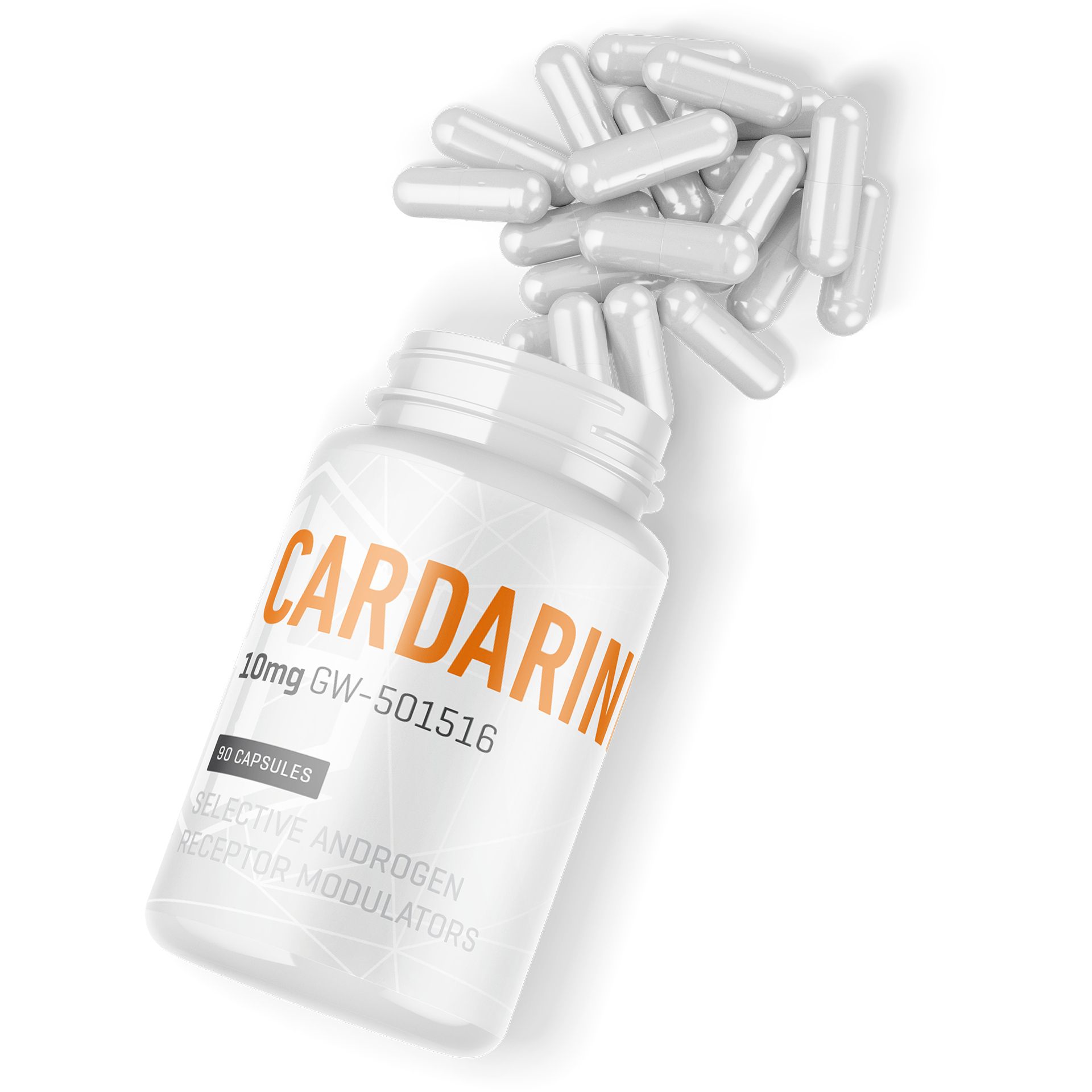
Cardarine might be the most misrepresented compound we sell. It is not a SARM. It will not add muscle. And the most famous endurance statistic attached to it comes from a study arm it was not even in. At the same time, it has something almost nothing else on the grey market has: three published human trials, run by a major pharmaceutical company, with real lipid and metabolic data.
It also has a cancer question hanging over it that most vendors refuse to discuss. We would rather you read the evidence and decide for yourself. Every claim below links to the actual study on PubMed.
What is cardarine (GW-501516)?
Cardarine, developed under the code GW-501516, is a PPAR-delta agonist. GlaxoSmithKline and Ligand Pharmaceuticals developed it in the late 1990s as a treatment for lipid disorders. PPAR-delta is a receptor that acts like a metabolic master switch in muscle and fat tissue. Turn it on and the body shifts toward burning fatty acids for fuel, the same adaptation that happens with endurance training.
The original preclinical work showed exactly that. In a 2001 study in PNAS, GW-501516 raised HDL cholesterol and promoted reverse cholesterol transport in primates. That result is why GSK took it into human trials, and why the human data that exists is all about cholesterol and metabolism rather than performance.
Is cardarine a SARM?
No. SARMs like RAD-140 or LGD-4033 bind the androgen receptor, the same receptor testosterone uses, which is how they build muscle and why they suppress your natural hormones. Cardarine never touches the androgen receptor. It is not anabolic, it is not hormonal, and it does not suppress testosterone. It gets grouped with SARMs because the same labs make it and the same people buy it. Chemically and biologically it is a different animal.
Two things follow from that. Cardarine will not add muscle mass, full stop. And it does not need PCT, because there is nothing hormonal to recover from.
What the human studies show
Cardarine is unusual among research compounds in that humans have actually taken it in controlled trials. Three matter.
The first human trial: HDL went up
In the first-in-human study, published in 2007, healthy volunteers took 2.5 mg or 10 mg daily for two weeks while hospitalized and sedentary. HDL cholesterol rose significantly in both dose groups while the placebo group’s HDL dropped 11.5 percent. Triglyceride clearance after a fatty meal improved on the drug. Two weeks, small groups, but a clean signal.
The metabolic study: fat oxidation is real
A 2008 trial in the journal Diabetes gave moderately overweight men 10 mg daily for two weeks. The results read like a wish list: fasting triglycerides down 30 percent, LDL cholesterol down 23 percent, apolipoprotein B down 26 percent, insulin down 11 percent, and liver fat down 20 percent. Measurements of exhaled CO2 confirmed the mechanism: more of the fat from a test meal was being burned for fuel. HDL did not move in this one.
The 268-person trial: the largest dataset
The biggest study, published in 2012, ran 12 weeks in 268 people with low HDL. At 10 mg daily, HDL rose up to 16.9 percent, triglycerides fell 16.9 percent, LDL fell 7.3 percent, and apoB fell 14.9 percent. The lipoprotein particle analysis showed a shift away from the small, dense LDL particles associated with heart disease.
Notice what is missing from all three trials: body composition, fat loss on the scale, and athletic performance. Nobody measured them. The human evidence for cardarine is a lipid and metabolism story. Every claim about what it does to a lifter’s conditioning is extrapolation from mice.
The endurance claim: what the mouse study actually showed
The famous citation here is a 2008 paper in Cell titled “AMPK and PPARdelta agonists are exercise mimetics”. It is a genuinely important study. It is also the most misquoted paper in this niche.
Here is what it found. GW-501516 combined with treadmill training synergistically increased oxidative muscle fibers and running endurance in mice. GW-501516 alone, in sedentary mice, did not produce the endurance boost. The arm of the study where sedentary animals gained 44 percent running endurance without exercise used AICAR, a completely different drug that activates AMPK directly.
So when a forum post tells you cardarine gives you endurance without training, it is citing the wrong molecule. The honest version of the claim: in mice, cardarine amplified the adaptations that training produces. If you do not train, the best available evidence says you are wasting it.
Why GSK abandoned cardarine: the cancer question
This is the part most vendors skip, and it is the most important section in this article.
In 2007, with human trials showing clean lipid results, GSK stopped the entire program. The reason came out at toxicology conferences in 2009: in the standard two-year rodent carcinogenicity studies, GW-501516 caused tumors in multiple organs, in both rats and mice, across the dose range tested. The full data was never published in a journal, which tells you something about how pharma handles inconvenient results. The World Anti-Doping Agency banned the compound in 2009 and later took the unusual step of issuing a public health warning about it.
The broader science on PPAR-delta and cancer is genuinely conflicted. Some studies found PPAR-delta activation stimulated proliferation of human breast and prostate cancer cell lines and accelerated cancer progression through VEGF signaling, with later work showing it accelerates colorectal tumorigenesis in mice. Other researchers found no growth effect at all across a panel of human cancer cell lines. Serious labs disagree.
Our read: the rodent tumor data was two years of continuous dosing at drug-development exposure levels, which is not the same as what a human does with the compound. But it was bad enough that a pharmaceutical giant wrote off a promising drug rather than run one more study. Anyone who tells you the cancer risk is debunked is selling something. Anyone who tells you it is proven in humans is also wrong. It is an open question, and you should treat it as one.
Realistic results and timeline
Based on the human data, what cardarine demonstrably does is shift lipids and fat metabolism: triglycerides down, LDL down, liver fat down, HDL up at higher doses, measurable within two weeks. For a lifter, the practical translation that users report is better conditioning on cardio work and an easier time staying lean in a cut. That part matches the mechanism but has never been measured in a trial, so hold it loosely.
What it will not do: add muscle, raise strength, or replace training. Most dramatic cardarine transformation photos are a disciplined cut wearing a cardarine label.
Dosage used in research
The human trials used 2.5 mg to 10 mg once daily, for two to twelve weeks. The common forum range of 10 to 20 mg daily runs at or beyond the top of what any human study ever tested. The half-life data from the development program supported once-daily dosing. Nothing in the published human work supports the idea that 20 mg does more than 10 mg; the 268-person trial saw most of the lipid benefit at the 5 and 10 mg doses.
Cardarine side effects
In the published trials, which were short, GW-501516 was well tolerated with no signal on standard safety labs. That is a real data point and an honest one. It is also two to twelve weeks of data in a few hundred people, which is nothing next to an approved drug.
Two things belong on the warning side of the ledger. The first is the rodent carcinogenicity above, which is the reason this compound is a research chemical and not a medicine. The second is the environment it is sold in: a 2026 case report describes severe liver injury in a man who bought ostarine, testolone and cardarine online, where chemical analysis found doses exceeding what the labels claimed. Unverified products with inaccurate dosing are the most documented harm in this entire category, which is exactly why anti-doping researchers who analyzed black-market products keep finding mislabeled and contaminated material.
Is cardarine legal in Canada?
Cardarine is not a controlled substance in Canada. It is not scheduled under the CDSA, and possessing it is not an offence. It is also not approved by Health Canada as a drug or a supplement, which is why it is sold strictly as a research compound. If you compete in tested sport, note that WADA has banned it since 2009 and its metabolites are a routine screening target.
The practical issue for Canadian buyers is the border. Research compounds ordered from US or overseas vendors cross the CBSA’s desk, and seized packages are simply gone. Ordering from a domestic vendor removes that variable entirely. We cover the full legal and shipping picture in our guide to buying SARMs in Canada.
Buying cardarine in Canada: what to check
Three things separate a real vendor from a label on a mystery powder.
- Public third-party testing. Not a claim, a link. Our current GW-501516 batch was tested by Janoshik Analytical at 99%+ purity, and the report is public. Every compound we sell has its certificate posted on our third-party analysis page, verifiable directly with the lab.
- Reviews tied to real purchases. We have over 1,900 purchase-verified customer reviews. Screenshots and testimonials are free to fake; a review system tied to order numbers is not.
- Domestic shipping. Shipped from within Canada means no CBSA roulette and no three-week wait.
You can see the current batch, pricing and reviews on our Cardarine (GW-501516) product page. If your research is focused on recomposition protocols, cardarine is also a common addition to the combinations on our stacks page, where its non-hormonal profile makes it an easy fit alongside compounds like MK-677.
Frequently asked questions
Is cardarine a SARM?
No. Cardarine is a PPAR-delta agonist. It does not bind the androgen receptor, does not build muscle, and does not suppress testosterone. It is grouped with SARMs by marketing, not by chemistry.
Does cardarine cause cancer?
In two-year rodent studies at continuous drug-development doses, it caused tumors in multiple organs, and GSK abandoned it for that reason. No human cancer data exists either way. Treat it as an open, serious question rather than a settled one.
Is cardarine legal in Canada?
It is not a controlled substance, so possession is legal. It is not approved for human use by Health Canada and is sold as a research compound. WADA bans it in tested sport.
What did cardarine do in human trials?
Across three trials up to 12 weeks, it raised HDL up to 16.9 percent, cut triglycerides by 17 to 30 percent, lowered LDL and apoB, and reduced liver fat by 20 percent. No trial measured fat loss or athletic performance.
Does cardarine need PCT?
No. It is non-hormonal and does not suppress testosterone, so there is nothing to restart after a research cycle.
Does cardarine work without training?
The mouse study everyone cites says no. GW-501516 improved endurance only when combined with training. The sedentary-mice endurance result came from AICAR, a different compound.
Products discussed are sold for research purposes. Nothing here is medical advice; the linked studies are provided so you can evaluate the evidence yourself.